
Home > INDUSTRIES > Solution >




Introduction to Filter Canisters:
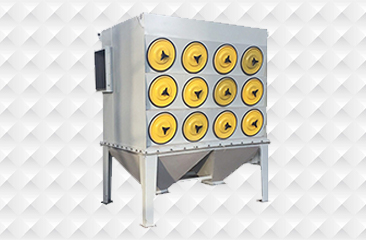
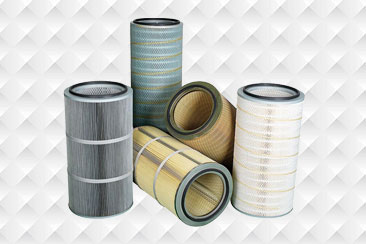
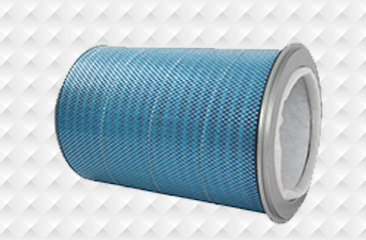
Filter canisters are the key components of filter industrial dust collectors. They not only determine the technical and economic parameters such as efficiency, resistance, power consumption, and maintenance costs of the industrial dust collector, but also affect the performance and service life of the dust collector. The structure of the filter canister consists of a top cover, a metal frame, pleated filter material, and a base. The filter material is folded into pleats, and then glued together end to end to form a cylinder. The interior of the cylinder is supported by a metal mesh frame, and is fixed at the top and bottom by the top cover and base. The top cover has fixing bolts and washers.
The working principle of the filter cartridge:
1. Deep filtration
This type of filter material is relatively loose, with large gaps between fibers. For example, the average gap of ordinary polyester needled felt is 20 to 100 microns. When the average particle size of dust is 1 micron, during the filtration operation, some fine particles will enter the interior of the filter material and remain there, while the rest will pass through the filter material and escape. Most of the dust adheres to the surface of the filter material, forming a filter layer. This filter layer will filter out the dust in the dust-laden gas flow. The fine particles that enter the interior of the filter material will increase the resistance, make the filter material harder, and eventually cause it to fail. This filtering method is usually called deep filtration.
2. Surface Filtration
On the side where the loose filter material comes into contact with the dusty gas, a layer of micro-porous film is adhered. The gaps between the fibers of this film are only 0.1 to 0.2 micrometers. If the average particle size of the dust remains at 1 micrometer, during the filtration process, almost all the dust will be blocked on the surface of the micro-porous film, and the fine dust cannot enter the interior of the filter material. This filtering method is usually called surface filtration. Surface filtration is an ideal filtering technology. It can further improve the dust removal efficiency, reduce the pressure loss of the filter material, and significantly save the power consumption of the dust removal system.
Xinxiang Lefilter Filter Co., Ltd All rights reserved Record No. : 11005909-1 prepared by Yu ICP


 +86 185 6822 9226
  enquiry@xxfilter.com