
Home > INDUSTRIES > Solution >



With the rapid development of the lithium-ion battery industry, requirements for production environments have become increasingly stringent.
Air filters play a crucial role in ensuring the cleanliness of lithium-ion battery production processes, improving product quality and enhancing safety performance.
Air Pollutants in Lithium-ion Battery Production and Their Hazards

1.Particulate Matter
Sources: Dust in the production environment, debris generated by equipment wear, etc.
Hazards: May cause internal short circuits of lithium-ion batteries, affect battery performance and service life, and even trigger safety accidents.
2.Chemical Pollutants
Sources: Volatilization of chemical reagents used in production, equipment leakage, etc.
Hazards: Will react chemically with the cathode and anode materials of lithium-ion batteries, impair battery electrochemical performance,
and reduce battery capacity and charge-discharge efficiency.
Types and Functions of Air Filters
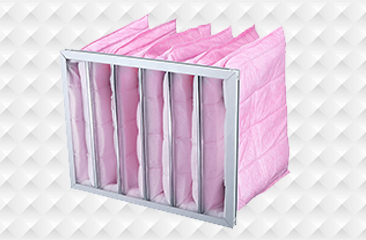
1.Pre-filters
Main Functions: Filter large particles such as dust and hair, protect downstream medium-efficiency and high-efficiency filters, and extend their service life.
Application Scenarios: Usually installed at the air inlet of air conditioning systems for preliminary filtration of air entering the workshop.
2.Medium-efficiency Filters
Functions: Further filter small particles such as pollen and dust particles, improving air cleanliness.
Application: Generally installed after pre-filters to supply cleaner air for high-efficiency filters.
3.High-efficiency Particulate Air (HEPA) Filters
Functions: Capable of removing tiny particles of 0.3 microns and above in the air, with a filtration efficiency of over 99.97%.
Key Applications: Used in critical processes of lithium-ion battery production, such as electrode coating and cell assembly, to ensure air meets strict cleanliness requirements
and prevent tiny particles from affecting battery quality.


Applications of Air Filters in Various Stages of Lithium-ion Battery Production
1. Raw Material Storage and Conveying
To ensure the purity of raw materials from contamination, air filters are installed in raw material storage warehouses and conveying pipeline systems to prevent dust
and other impurities from entering raw materials.
For example, in storage areas of raw materials such as lithium salts, air filters can filter out moisture and impurities in the air, avoiding raw material dampness and contamination,
thus ensuring the stability of raw material chemical properties and providing basic materials for subsequent battery production.
2. Electrode Manufacturing
The electrode coating process requires high air cleanliness. Any tiny particle impurities may cause uneven electrode coating, affecting the charge-discharge performance
and consistency of batteries.
In this process, air filters not only remove solid particles in the air but also control chemical pollutants such as solvent vapors.
High-efficiency air filtration systems ensure the cleanliness of the coating environment, enabling electrode coatings to be uniformly and accurately applied to current collectors,
improving electrode quality and performance.

Xinxiang Lefilter Filter Co., Ltd All rights reserved Record No. : 11005909-1 prepared by Yu ICP


 +86 185 6822 9226
  enquiry@xxfilter.com