
Home > INDUSTRIES > Solution >



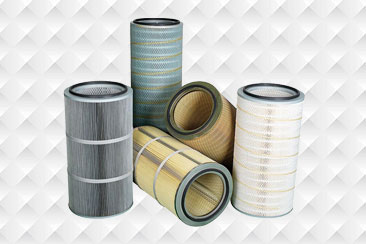
Selecting a suitable dust collector is crucial for flour mills. A high-quality dust collector not only boosts production efficiency but also ensures a safe and hygienic working environment. However, some baghouse dust collectors currently used in flour mills deliver subpar performance, creating various production challenges. Common issues include declining dust removal efficiency—as filter bags wear, their filtration capacity diminishes, leading to higher dust emission concentrations that severely impact flour quality and taste; increased resistance—accumulated dust on filter bags raises airflow resistance, increasing fan load and energy consumption; short filter bag service life, which requires frequent replacement, driving up maintenance costs and disrupting production continuity; and even dust explosions in severe cases, posing major safety hazards.
Therefore, choosing a high-quality dust collector is essential. Selection should fully consider dust removal efficiency, resistance, filter bag service life and safety, alongside the mill’s production scale, process characteristics and emission standards. Only a properly selected dust collector can guarantee production efficiency, product quality and employee safety and health.
Several critical factors must be comprehensively evaluated when purchasing a flour mill dust collector to ensure it meets production needs. First, the type of dust collector is key, determined by the mill’s production processes and dust properties. For mills with high fine dust content, high-efficiency filtration and capture equipment such as baghouse or electrostatic precipitators are preferred for effective dust removal and a clean working environment. Second, the dust collector’s processing capacity and efficiency are vital—dictated by the mill’s production scale and speed, the equipment must handle the maximum dust load, and high efficiency ensures rapid dust clearance for smooth production. Finally, maintainability and cleanability reduce operational costs and extend equipment life. Opt for a dust collector with rational design and compact structure for easy daily maintenance and cleaning, and understand its maintenance cycle and cleaning methods to ensure long-term stable operation. In summary, selection should integrate dust collector type, processing capacity, efficiency, maintainability and cleanability. Proper selection and operation create a clean, healthy production environment, improve efficiency and cut operational costs.
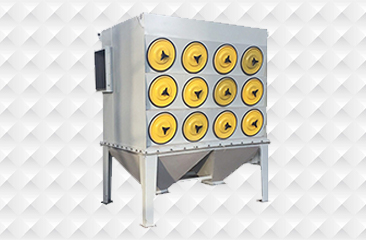
The core question for flour mills is how to select an optimal dust collector. In line with modern industry standards, pulse baghouse dust collectors are the standard choice, and selection should be based on the following key points:
Suction point selection requires comprehensive consideration and prioritization. Comprehensive consideration means incorporating all applicable equipment into the air network where the dust fan load permits. Prioritization mandates ensuring optimal suction for key production equipment, including stoners, plansifters, wheat scourers, air separators, upper and lower heads of bucket elevators and purifiers. For screw conveyors, scraper conveyors, tailing bins and metering equipment, minimize or even eliminate suction points and air volume when necessary—ensuring effective suction for key equipment is the top priority.
Air leakage draws a large volume of cold outside air into the dust collector, causing a rapid local temperature drop and condensation due to water vapor precipitation. Common causes of air leakage include missing welds in the dust collector housing during fabrication and installation, poor sealing of discharge devices, missing welds in custom pipelines during installation, and inadequate sealing at flange joints between the dust collector and custom pipelines.
Dust collection pipeline dimensions and airflow velocity are determined by the treated air volume and velocity—air volume remains relatively stable, making velocity the key parameter for pipeline sizing. Low velocity reduces energy consumption but may cause dust deposition and severe pipeline clogging; excessively high velocity increases energy consumption and pipeline wear, especially at bends. The recommended airflow velocity for dust collection pipelines is 18m/s~23m/s.
In terms of design, low-pressure pulse baghouse dust collectors are the preferred option. High-pressure pulse dust collectors require a larger floor area and entail higher investment costs. Sizing and selection should be based on the total dust treatment air volume and the manufacturer’s product specifications for low-pressure pulse dust collectors.

Xinxiang Lefilter Filter Co., Ltd All rights reserved Record No. : 11005909-1 prepared by Yu ICP


 +86 185 6822 9226
  enquiry@xxfilter.com