
Home > INDUSTRIES > Solution >



How to Calculate the Air Consumption of Pulse Jet Dust Collectors?
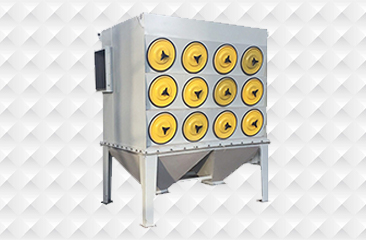
A pulse jet dust collector is a common industrial dust removal device that removes dust from filter bags via pulse jet injection. Air consumption is a key operational parameter of the pulse jet dust collector, directly impacting the equipment's operation efficiency and operational costs. Accurately calculating the air consumption is therefore of great significance for equipment selection, operation and maintenance.
I. Influencing Factors of Air Consumption for Pulse Jet Dust Collectors
1. Injection Pressure
Injection pressure refers to the pressure of compressed air in the air tank when the pulse valve is opened. A higher injection pressure results in a faster airflow velocity from the pulse valve during injection, delivering a better ash cleaning effect on filter bags, but it also increases air consumption.
2. Injection Interval
Injection interval is the time between two consecutive openings of a pulse valve. A shorter injection interval means more pulse valve openings per unit time, leading to higher air consumption.
3. Injection Duration
Injection duration is the length of time the pulse valve remains open for injection each time. A longer injection duration releases a greater volume of air, increasing air consumption. However, an excessively long injection duration may cause excessive ash cleaning of filter bags and compromise dust removal efficiency.
4. Size and Quantity of Pulse Valves
The size and quantity of pulse valves directly affect air consumption. Generally, a larger pulse valve delivers a greater air volume per single injection, resulting in higher air consumption. Meanwhile, a larger number of pulse valves leads to a higher total injection air volume per unit time, with a corresponding increase in air consumption.
II. Calculation Method for Air Consumption of Pulse Jet Dust Collectors
The air consumption of a pulse jet dust collector can be calculated using the following formula:
L = a × (n×q/T) m³/min
Where:
L = Air consumption
a = Additional coefficient (typically set to 1.2, to account for losses such as air leakage in pipelines)
n = Quantity of pulse valves
q = Air volume per single injection of each pulse valve (unit: cubic meters)
T = Injection interval (unit: minutes)
Based on practical experience, when the injection pressure is 5–7×10⁵ Pa and the injection duration is 0.1–0.2 seconds, the air consumption q for a single injection of each pulse valve can be taken as 0.022 cubic meters.
It should be noted that the above formula is only an approximate calculation method. The actual air consumption is also affected by various factors such as dust properties, filter bag material and equipment structure. Therefore, adjustments and optimizations based on actual working conditions are required during equipment selection, operation and maintenance.

Xinxiang Lefilter Filter Co., Ltd All rights reserved Record No. : 11005909-1 prepared by Yu ICP


 +86 185 6822 9226
  enquiry@xxfilter.com