
Home > INDUSTRIES > Solution >



Arrangement and Installation Details of Baghouse Dust Collectors
1. Arrangement of Dust Collectors
The division of dust collection systems shall comply with the following provisions:
1) Dust-emitting points in the same production process that operate simultaneously and are located close to each other should be combined into a single system;
2) Dust-emitting points that operate simultaneously but generate different types of dust can be combined into a single system if the process allows mixed recovery of different dusts or the dust has no recovery value;
3) Dust-laden gases with different temperatures and humidity shall be divided into separate systems if mixing them may cause condensation inside the air ducts.
When there are many dust-emitting points in process equipment, the dust collection systems should be centrally arranged by zones. The number of air exhaust points connected to each dust collection system should not be excessive. If the hydraulic balance requirements of the air system cannot be met solely by adjusting the duct diameter, balancing valves may be installed on branch pipelines with low air resistance, and such valves should preferably be arranged on vertical pipelines.
The exhaust air volume of a dust collection system shall be calculated as the sum of the maximum exhaust air volume of simultaneously operating points and the air leakage rate of intermittently operating exhaust points. Interlocked valves linked with process equipment shall be installed at each intermittently operating exhaust point, and the air leakage rate when the valves are closed shall be 15% to 20% of the normal exhaust air volume.
(When multiple fume hoods are combined into a single exhaust system, the system air volume shall be determined based on the total air volume of the fume hoods used simultaneously. An air volume regulating valve should be installed at the exhaust outlet of each fume hood, and the fan should preferably be equipped with variable frequency speed regulation.)
(1) Types of Dust Collection Systems
Based on the production process, equipment layout, exhaust air volume and factory building conditions, dust collection systems are classified into three types: local dust collection, decentralized dust collection and centralized dust collection.
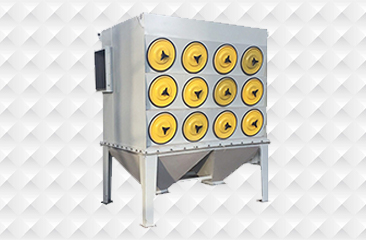
1) Local dust collection: The dust collector is installed directly near the production equipment to capture and recover dust on-site, with basically no or only short dust collection pipelines required. Examples include insert-type baghouse dust collectors for sand mixers in foundry workshops, dust collection units directly mounted on pneumatic conveying silos, and various widely used small dust collection units. This system features a compact layout, simple structure and convenient maintenance and management.
2) Decentralized dust collection system: When exhaust points are scattered in a workshop, the points can be appropriately combined into a single system based on the properties of the conveyed gas and working shifts. The dust collectors and fans of a decentralized dust collection system should be installed as close as possible to the dust-generating equipment. This system has short air ducts, a simple layout and easy pressure balance, and is currently widely applied.
3) Centralized dust collection system: This system is suitable for workshops with concentrated dust-emitting points and conditions for adopting large-scale dust collection facilities. It can integrate all exhaust points into one dust collection system or centrally arrange the dust collection equipment of several systems in one place. Centralized maintenance and management of dust collection equipment enables easy mechanical disposal of recovered dust. However, this system has long and complex pipelines, difficult pressure balance and high initial investment, so it is only applicable to a small number of large-scale factories.
(2) Provisions for Dust Collector Arrangement
1) If the collected dust is allowed to be directly integrated into the production process, the dust collector should preferably be installed above production equipment such as belt conveyors and silos.
2) If the collected dust is not allowed or difficult to be directly integrated into the production process, the dust collector may be installed at a separate suitable location, with dedicated dust hoppers and corresponding handling equipment provided.
3) Dust collectors should preferably be arranged in the negative pressure section of the system. If arranged in the positive pressure section, dust exhaust fans should be selected.
4) The unbalance rate of calculated pressure loss at each exhaust point of a dust collection system should not exceed 10%. If this requirement cannot be met by adjusting the duct diameter or changing the air volume, air volume adjustment devices may be installed.
5) Anti-freezing measures shall be taken for wet waste gas purification equipment that is prone to freezing. In severe cold regions, such equipment shall be installed indoors; in cold regions, it should preferably be installed indoors.
Note: Flue gas dust collectors should be installed outdoors.
6) Air leakage prevention measures shall be taken for the dust discharge pipes of dry dust collectors and the sewage discharge pipes of wet dust collectors.
2. Relevant Provisions for Dust Collector Installation and Construction
(1) General Installation Provisions
Dust collector installation shall comply with the following provisions:
1) The installation position of the dust collector shall be accurate, and the fixing shall be firm and stable. The allowable installation deviations and inspection methods of the dust collector shall conform to the specified requirements;
2) All movable or rotating parts of the dust collector shall operate flexibly and reliably, in accordance with the design requirements;
3) The ash discharge valves, discharge valves and sludge discharge valves of the dust collector shall be installed in an airtight manner, and be easy to operate, maintain and repair.
Xinxiang Lefilter Filter Co., Ltd All rights reserved Record No. : 11005909-1 prepared by Yu ICP


 +86 185 6822 9226
  enquiry@xxfilter.com