
Home > INDUSTRIES > Solution >



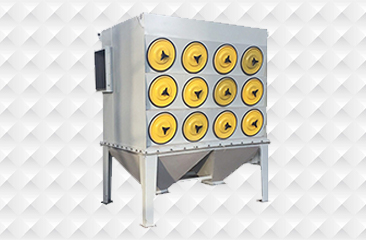
Notes on the Installation of Baghouse Dust Collectors
1.1 Before installation, read this instruction manual carefully and check the quantity and quality of all parts against the delivery list.
1.2 Install the equipment in sequence and conduct a quality inspection after each step to ensure accuracy and correctness.
1.3 Take care to prevent deformation during equipment hoisting. Lifting lugs are welded on all key components at the factory for convenient hoisting.
1.4 After installing the upper box, hopper and other components, ensure all joints are airtight. Full welding must be performed where welding sealing is required. For connections with fasteners, gaskets must be added and all fasteners fully tightened.
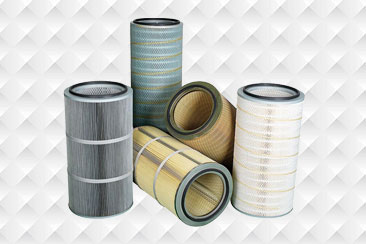
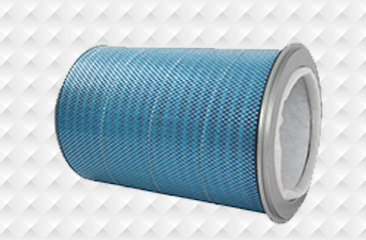
1.5 Avoid scratching the filter bags with hard objects during installation, and prevent welding sparks from falling onto the internal filter bags and igniting them during electric welding construction.
1.6 After installation, all debris in the clean air plenum and hoppers of the dust collector must be completely removed.
Note:
① If the equipment is installed on a boiler, the temperature of flue gas entering the baghouse dust collector must not exceed 200°C. If the flue gas temperature exceeds 200°C, install waste heat recovery equipment in front of the baghouse dust collector.
② If the equipment body is not insulated, it must be installed indoors to prevent the equipment from reaching the dew point during operation.
③ If the equipment is not installed immediately after delivery, take moisture, water, dust and fire prevention measures to avoid moisture damage to the internal filter bags.
1. Inspect and lubricate cylinders, conveyors and induced draft fans regularly, 1-2 times a week. Lubricate and drain water from pneumatic triplets, air compressors and air tanks frequently, once per shift.
2. During the normal operation of the dust collector, the operator shall monitor the inlet and outlet temperatures of the dust collector and the current of the main fan, and keep records, generally once every 30 minutes.
3. The management of the dust collector during start-up, shutdown and operation must be strictly implemented in accordance with the relevant provisions of Clause 1 of this specification.
4. Keep cylinders, solenoid valves, electrical components, motors and control cabinets clean.
5. For manual operation, remember to perform ash discharge first (manually open the ash discharge valve at the bottom of the box) and then ash cleaning.
6. Inspect the sealing condition of cylinders, solenoid valves, flange faces and access doors regularly. If air leakage or aging of sealing strips is found, replace them in a timely manner. Monitor the temperature of flue gas entering the baghouse dust collector to ensure it does not exceed 200°C; shut down the equipment immediately to troubleshoot if any abnormality occurs.
7. Inspect the operation of the air circuit system and ash discharge regularly. If any abnormality is found, identify the cause and eliminate it promptly.
8. Pay close attention to the ash level in the hoppers and perform ash discharge and cleaning in a timely manner with a high frequency. The operator shall manually discharge ash from the hoppers at the lower end of the baghouse dust collector every 30 minutes, and tap the inner wall of the upper box with square timber or a stick to remove adhered dust. When shutting down the equipment, turn off the induced draft fan, activate the pulse valves of the baghouse dust collector for delayed injection for 1-2 hours, and then cut off the power supply to the pulse valves.
9. If the equipment is matched with a boiler, ensure the fuel is clean and pure, and do not mix it with garbage or waste for combustion. Avoid sprinkling water on coal when burning it. For hand-fired coal boilers, add whole pieces of coal to prevent coal powder from entering the furnace and forming sparks that affect the service life of filter bags. For biomass boilers, ensure the fuel is dry; if the fuel has a high moisture content, the ash discharged from the hopper of the pulse baghouse dust collector will be in flakes or lumps (the normal discharged ash shall be in powder form), and replace the fuel with better dryness in a timely manner in such cases.
10. If the baghouse dust collector is installed with a new boiler, a flue gas bypass shall be designed for the flue during boiler curing (or the filter bags shall be removed), and flue gas shall not pass through the baghouse dust collector for direct filtration.
Xinxiang Lefilter Filter Co., Ltd All rights reserved Record No. : 11005909-1 prepared by Yu ICP


 +86 185 6822 9226
  enquiry@xxfilter.com