
Home > INDUSTRIES > Solution >



Common Workshop Dust Collection Methods
In industrial production workshops, dust generation is a common and challenging issue. Effective dust collection is critical for protecting employee health, improving production environment quality, and maintaining the normal operation of production equipment. The following are detailed introductions to several common workshop dust collection methods.
1. Local Ventilation Hood Collection
Local ventilation hoods are effective devices that directly target dust generation sources. They are designed in different forms based on the shape, size, and operational characteristics of dust-producing equipment.
Enclosed Ventilation Hoods: Used for fixed-position equipment with concentrated dust generation, such as crushers and welding workstations. These hoods fully or partially enclose the equipment, leaving only material inlets/outlets or operation openings. Negative pressure inside the hood draws generated dust into the ventilation system.
External Suction Hoods: Suitable for scattered dust sources or mobile equipment, such as multi-station machining areas in large mechanical workshops. By optimizing the hood’s shape, size, and position, high-velocity airflow captures and draws in surrounding dispersed dust.
When designing local ventilation hoods, precise calculation of required air volume is essential to ensure effective dust capture. Generally, the hood’s airflow velocity should be maintained at 0.5–1.5 m/s, adjusted based on dust properties and concentration. Materials like stainless steel and galvanized steel plates are commonly used for their strength, corrosion resistance, and airtightness.
2. General Ventilation and Air Exchange Collection
When workshops have numerous and widely distributed dust sources, a general ventilation and air exchange system becomes necessary. This system arranges exhaust and supply air vents on the workshop ceiling or walls, using fans to create directional air flow. Exhaust vents expel dust-laden air, while supply vents introduce fresh air to dilute dust concentrations.
Calculating general ventilation volume requires considering workshop space, number of employees, equipment heat dissipation, and dust generation rate. Industrial workshops typically require no less than 6–8 air changes per hour. Ventilation duct design focuses on reducing resistance, with careful planning of duct diameter, routing, and number of elbows. Primary dust removal devices, such as cyclone separators, can be installed in ducts to pre-separate large dust particles, reducing the load on subsequent dust removal equipment.
3. Baghouse Dust Collector Collection
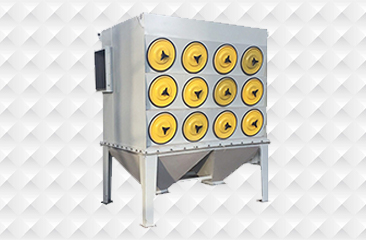
Baghouse dust collectors are highly efficient dust collection devices widely used in various industrial workshops. Their working principle involves passing dust-laden gas through filter bags, where dust particles are trapped by the fabric’s fibrous layer, forming a dust cake on the bag surface. As the dust cake thickens, filtration resistance increases, and dust is dislodged into the hopper via pulse jet cleaning or mechanical shaking.
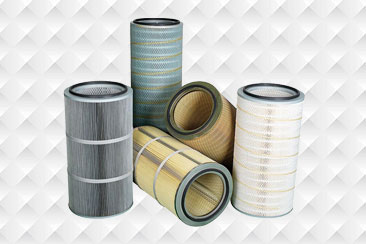
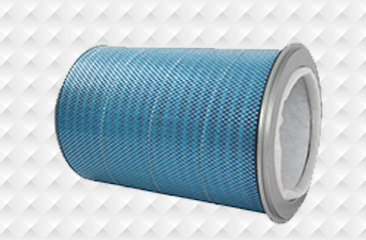
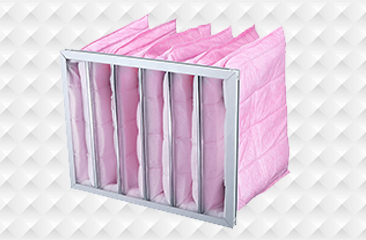
The key to baghouse performance lies in filter bag selection. Different bag materials suit different dust types:
Glass fiber bags: For high-temperature dust.
Corrosion-resistant bags: For corrosive dust.
During installation and operation, ensure bags are installed flat and wrinkle-free, with airtight seals between bag openings and the tube sheet. Properly set cleaning cycles and pressures to ensure long-term stable operation. Baghouse dust collectors achieve over 99% efficiency for dust particles larger than 0.1 μm.
4. Electrostatic Precipitator Collection
Electrostatic precipitators use high-voltage electric fields to charge dust particles, which then migrate to and deposit on electrodes under electric field force. They consist of corona electrodes (discharge electrodes) and collecting electrodes. Corona electrode discharge ionizes the gas, causing dust particles to acquire charge and move to the collecting electrodes.
Advantages include high efficiency, low resistance, low energy consumption, and the ability to handle high-temperature, high-humidity, and large-volume dust-laden gas, with excellent capture of fine dust (0.01–100 μm). However, they require high initial investment, occupy large space, demand advanced installation and maintenance expertise, and have specific requirements for dust resistivity. They are widely used in large-scale power, metallurgy, and chemical industry workshops, such as flue gas dust removal in thermal power plants.
5. Wet Dust Collector Collection
Wet dust collectors use water or other liquids to bring dust-laden gas into full contact with the liquid, capturing particles that are then separated in sedimentation tanks. Common types include spray towers and Venturi scrubbers. In spray towers, dust-laden gas enters from the bottom and flows countercurrent to liquid sprayed from the top, with dust particles removed by liquid washing.
Wet dust collectors are suitable for water-soluble dust or dust that reacts with liquids, and they effectively cool and purify high-temperature, high-humidity gas.
However, they generate wastewater that requires treatment to avoid secondary pollution, necessitating supporting wastewater treatment facilities.
In summary, workshop dust collection requires a comprehensive evaluation of dust properties, source characteristics, workshop layout, and economic costs. Selecting the appropriate method or a combination of methods ensures optimal dust collection, creating a clean and safe production environment.

Xinxiang Lefilter Filter Co., Ltd All rights reserved Record No. : 11005909-1 prepared by Yu ICP



 +86 185 6822 9226
  enquiry@xxfilter.com