
Home > INDUSTRIES > Solution >



How to Choose the Right Filter Cartridge
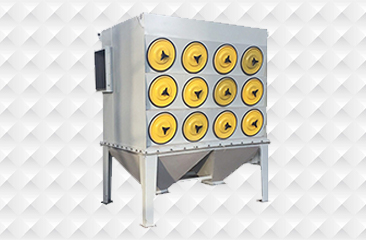
Cartridge dust collectors are a practical and reliable choice for most powder and bulk solid particulate matter collection and filtration applications.
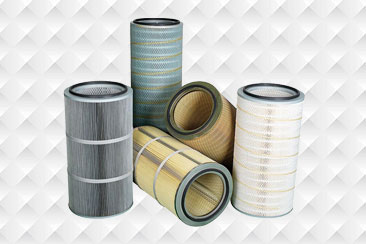
Choosing the right filter cartridges and maintaining them properly will significantly improve the effectiveness and energy efficiency of your dust collection solution.
What Kind of Filter Cartridge Do You Need?
Powder and bulk solid dust collection covers a wide range of dust types, from ultrafine and potentially toxic compounds to heavy, abrasive mineral powders.
Different types of powder and bulk solid dust will require different filtration solutions.
Choosing the right dust collector filter cartridge depends on several key factors, including (but not limited to) the following:
1. What are the physical properties of the dust?
Characteristics such as particle size distribution and morphology will affect the selection of filter cartridges: heavy, coarse, and abrasive dust may require a different type of filter media than ultrafine powders.
Abrasive dust may also require specialized dust collection system engineering to protect the filter cartridges and other system components for their proper lifespan and function (e.g., baffles or gravity settling chambers).
2. Is the dust wet, sticky, or oily? Some dusts are naturally oily, sticky, or hygroscopic. Hot and humid environments can also affect the moisture content of the dust.
These factors will influence the filter cartridge load and the ease with which the pulse-jet cleaning system can clean the cartridges. When collecting moist or sticky dust, selecting specialized filter media and coatings can help extend the life of the filter cartridges.
3. How much dust is generated?
The higher the dust load, the larger the filter media area required per unit volume of gas flow.
This is called the air-to-cloth ratio and is an important consideration in dust collector size and filter cartridge selection.
4. How toxic or hazardous is the dust?
Compared to less hazardous dust, highly toxic or harmful dust requires more aggressive filtration solutions.
The dust collector must have sufficiently reliable filtration accuracy and efficiency to protect workers' occupational health requirements and comply with workplace hazardous exposure limits. For example, the dust collection system may require HEPA high-efficiency filter cartridges or a safer BIBO (bag-in-bag-out) filter replacement method.
5. Air Quality and Cleanliness Level Requirements for the Production Environment
Besides protecting personnel on the production line, maintaining the corresponding cleanliness level of the overall production environment is also crucial.
If cross-contamination exists, or if processes must be completed in or near-cleanroom conditions, more efficient filtration is required.
6. Is the Dust Combustible or Sticky?
Combustible dust requires special care during collection, including the selection of filter cartridges.
If the dust is prone to static electricity or poses a risk of spontaneous combustion, anti-static filter cartridges are recommended.
7. How to Maintain and Care for Filter Cartridges?
Maintenance methods and costs are another important factor to consider when selecting a cartridge dust collector.
Low-cost filter cartridges made with low-quality filter materials may have low initial costs, but during operation, the high relative load can easily cause wear, tearing, and pores, necessitating frequent cartridge replacements and higher operating costs. Maintenance methods also depend on the characteristics of the dust and environmental factors, such as humidity.
Understanding Filtration Efficiency
Filtration efficiency is one of the most important factors to consider when selecting filter cartridges for bulk solid particulate matter applications.
Two common metrics used to assess filtration efficiency are the Minimum Reported Efficiency Value (MERV) and the High Efficiency Particulate Air (HEPA) rating.
MERV Rating
The MERV rating, established by the American Society of Heating, Refrigerating and Air-Conditioning Engineers (ASHRAE), is a widely used method for measuring filtration efficiency.
MERV ratings range from 1 to 20; a higher MERV rating indicates that the cartridge can capture a higher proportion of particles of different sizes (3–10 microns, 1–3 microns, or 0.3–1 micron).
Cartridges rated MERV 17 and above are equivalent to HEPA filtration. Most dust collector cartridges are rated between MERV 11 and MERV 16.
HEPA Rating
HEPA cartridges—and their more efficient counterparts, Ultra Low Particulate Air (ULPA) cartridges—are used for applications requiring filtration efficiency higher than MERV 16.
To meet HEPA standards, a cartridge must remove 99.97% of particles as small as 0.3 microns. ULPA cartridges must capture 99.999% of particles 0.12 microns or larger and are used when cleanroom conditions are required.
Cartridge dust collectors are sometimes equipped with HEPA high-efficiency filter cartridges to collect finer contaminants that pass through the cartridge, achieving even higher emission requirements.


Xinxiang Lefilter Filter Co., Ltd All rights reserved Record No. : 11005909-1 prepared by Yu ICP


 +86 185 6822 9226
  enquiry@xxfilter.com